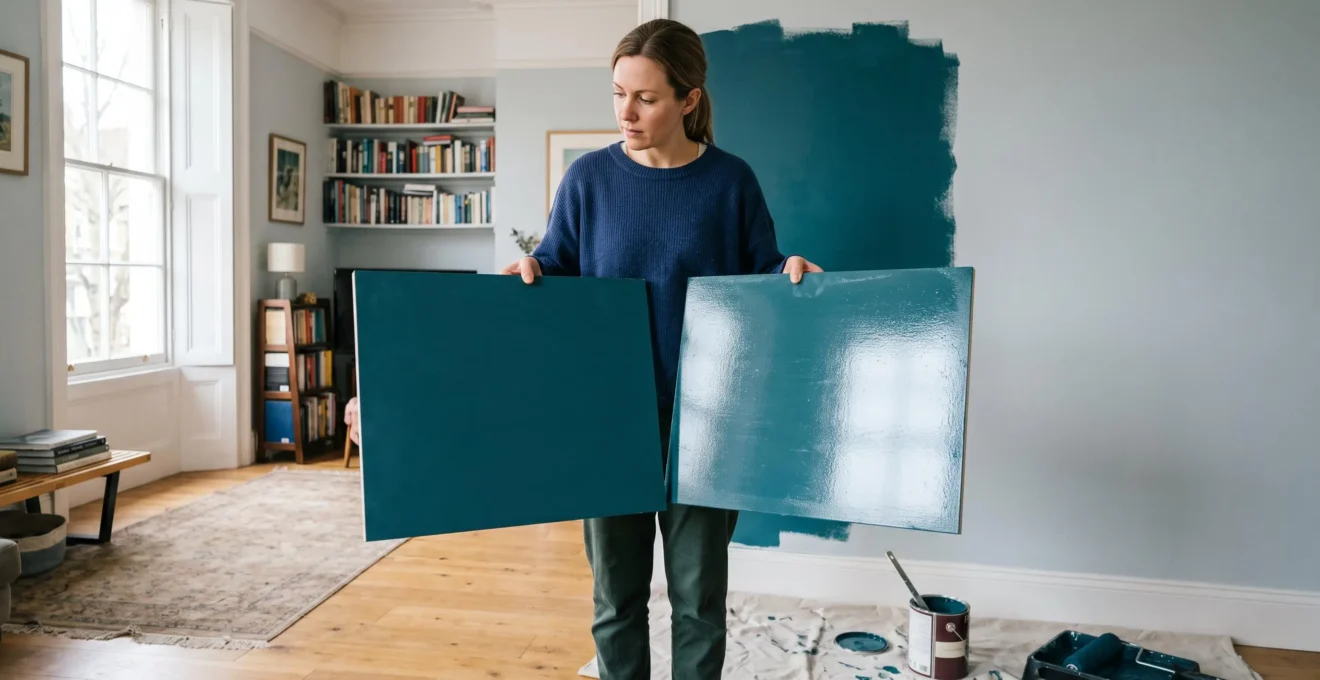
The right surface finish depends on more than whether a room looks better with matt or satin paint. Sheen changes how light travels across walls, how readily imperfections become visible and how a surface responds to fingerprints, moisture, cleaning and everyday wear. A finish that looks elegant on a bedroom wall may be frustrating on a staircase handrail or kitchen cabinet.
Start with three questions: what is the material, how is the surface used and what lighting conditions will reveal its texture? Matt finishes generally soften reflections and disguise minor irregularities. Satin finishes introduce controlled reflection and can offer practical cleaning advantages, depending on their formulation. Higher-gloss treatments create stronger highlights but demand careful preparation. Textured finishes add visual interest while sometimes making maintenance more complicated.
There is no universally superior sheen. The most reliable choice comes from examining the actual substrate, comparing physical samples in the intended room and checking the manufacturer’s performance and maintenance guidance before committing to a finish.
Surface finish selection at a glance
- Consider light and surface condition together: matt reduces distinct reflections, while satin can accentuate both architectural details and imperfections.
- Match durability to contact: frequently handled or cleaned surfaces need proven washability and resistance to rubbing, not simply a fashionable sheen.
- Think beyond the initial appearance: maintenance, repairability, substrate compatibility and the cost of future refinishing should influence the decision.
- Why Does the Same Colour Look Different on Matt and Glossy Surfaces?
- How Can You Match a Surface Finish to High-Touch Areas of the Home?
- Matt or Satin Finish: Which Works Better in a Low-Light Room?
- Which Surface Finishes Make Scratches and Uneven Walls More Visible?
- When Is Refinishing a Surface More Sensible Than Replacing It?
- Matte or Satin Finish: Which Is More Practical for Busy Walls?
- Matt or Satin Floor Finish: Which Hides Everyday Wear Better?
- How Can a Matte Finish Make a Room Feel Softer Without Looking Flat?
Why Does the Same Colour Look Different on Matt and Glossy Surfaces?
The same paint colour can look lighter, darker or more intense when its surface sheen changes because matt and glossy finishes reflect light differently. Glossy coatings produce more concentrated, directional reflections, while matt coatings scatter reflected light more broadly. The result depends on the viewing angle, the surrounding illumination and the colour itself, even when the underlying pigment is identical.
On a smooth glossy surface, a greater proportion of visible reflection is specular: light is redirected in a recognisable direction, producing highlights that may resemble a nearby window or lamp. A matt surface disperses reflections over a wider range of directions, making distinct reflected images less prominent.
This difference changes the balance between the colour seen from the coating and the light reflected from its surface. A dark glossy wall may appear especially deep away from a highlight, then suddenly much brighter where it catches a window. The same colour in matt can look more consistent from several positions, although it may appear darker under certain viewing conditions.
Sherwin-Williams‘ explanation of gloss and sheen describes how finish reflectance and viewing angle affect perceived colour. It also distinguishes gloss measurements taken at 60 degrees from sheen measurements taken at 85 degrees. These measurements describe optical behaviour, not a universal prediction of how every colour will look in every room.
Natural lighting adds another variable. A north-facing room may receive relatively diffuse daylight, whereas a room with direct afternoon sun can develop strong, moving highlights. Curtains, external shading and the position of furniture also influence the amount and direction of light reaching painted surfaces.
Digital colour previews and printed swatches are useful for narrowing choices, but they cannot reliably reproduce the interaction between a real coating’s texture, sheen and room lighting. They should not replace physical samples.
Apply or obtain samples in the exact colour and intended sheen, ideally on sufficiently large boards. Compare them vertically near the actual wall, moving between direct light and shade. Inspect them during the day and under the room’s evening lighting. The aim is not merely to identify the preferred colour but to observe how stable its appearance remains as conditions change.
Once the optical effect is understood, the next decision is practical: whether the chosen coating can tolerate the contact and cleaning demands of its location.
How Can You Match a Surface Finish to High-Touch Areas of the Home?
Choose finishes for high-touch surfaces according to how often they are handled, what contaminants reach them and how frequently they need cleaning. Doors, handrails, skirting boards and window ledges typically need coatings suited to repeated contact. Satin or higher-sheen products can be useful, but verified durability and cleanability matter more than sheen alone.
A room-by-room assessment should distinguish occasional contact from continuous rubbing. A painted wall behind a sofa has different requirements from a door frame repeatedly touched by hands, bags and cleaning cloths. Kitchens introduce grease and food residue, while bathrooms may expose surfaces to condensation and splashes.
The following comparison provides a practical starting point rather than a substitute for checking product specifications.
| Surface | Main exposure | Selection priority |
|---|---|---|
| Interior doors and frames | Hand contact, knocks and regular wiping | Scrub-resistant, cleanable trim coating |
| Staircase handrails | Repeated gripping and friction | Wear resistance, grip and substrate compatibility |
| Skirting boards | Dust, vacuum contact and occasional impacts | Easy cleaning and resistance to scuffing |
| Kitchen cabinet fronts | Fingerprints, grease and moisture | Suitable cabinet finish with proven cleaning resistance |
| Window ledges | Dust, handling and possible condensation | Washability and moisture suitability |
| Low-contact bedroom walls | Occasional touching and dust | Visual appearance and appropriate maintenance |
A satin or gloss finish may clean more readily than a conventional flat paint, yet a reflective surface can also make fingerprints and local scuffs more noticeable in certain lighting. That is why visual cleanliness and actual resistance to repeated cleaning should be assessed separately.
A less obvious problem is burnishing. When some low-sheen paints are repeatedly rubbed or scrubbed, the affected areas become locally shinier. The coating has not necessarily acquired dirt; its surface has changed through friction.
Sherwin-Williams’ advice on paint marring identifies repeated contact, abrasive cleaning and insufficient scrub resistance as contributors to this effect. It recommends selecting durable coatings for surfaces such as doors, trim and window sills.
However, the protective properties of a coating cannot be inferred solely from its gloss level. Binder chemistry, formulation, application, curing and substrate preparation all affect performance. A modern washable matt paint may outperform an unsuitable satin product in a particular application.
For heavily used surfaces, prioritise the manufacturer’s intended use, cleaning instructions and resistance claims. Where moisture is present, also confirm that the coating is appropriate for the exposure rather than relying on sheen as a measure of water protection.
These practical requirements become even more important when lighting conditions tempt homeowners to select sheen for appearance alone.
Matt or Satin Finish: Which Works Better in a Low-Light Room?
Satin can create brighter highlights in a low-light room, but it does not automatically make the whole space brighter. Its reflected light depends on where windows and lamps are positioned. Matt often works better on uneven walls because it reduces sharp reflections. Choose between them by examining both the available light and the condition of the surface.
Two problems are often confused: insufficient overall illumination and a finish that visually exaggerates defects. Increasing reflectivity may address the appearance of certain surfaces without improving light distribution throughout the room.
In a room with smooth, recently prepared walls, satin or eggshell paint can create subtle highlights that make architectural details more noticeable. It may be particularly effective on selected woodwork, cabinet fronts or surfaces receiving indirect daylight.
However, a room lit mainly by one small window may develop a concentrated bright patch on a satin wall while the opposite side remains comparatively subdued. Reflecting light more directionally is not the same as distributing light evenly.
For an older room with plaster irregularities, a deep matt finish can be the more balanced option. It helps reduce the visibility of bumps and repairs while keeping surface reflections restrained. Light-coloured finishes and strategically positioned lamps may then be more useful than simply increasing sheen.
Colour also deserves attention. A light matt coating may provide a bright overall appearance without producing the pronounced highlights associated with a darker satin finish. Actual results vary with pigment, coating formulation and illumination.
Benjamin Moore‘s Color Handbook recommends assessing physical samples in changing lighting conditions, including different times of day. It also describes smoother surfaces as more suitable for reflective finishes and matt finishes as more forgiving of imperfections.
A five-step finish test for a dim room
- Map the light: identify window positions, shaded walls and evening light sources; produce a simple room sketch.
- Inspect the substrate: note cracks, roller marks and surface irregularities; produce a short preparation list.
- Prepare matching samples: obtain the same colour in the intended matt and satin formulations; label both boards.
- Observe changing conditions: compare the boards in daylight and under actual evening lamps; record where highlights or defects appear.
- Confirm maintenance suitability: check each product’s intended use and cleaning instructions; record the final selection for each surface.
The same sample evaluation also reveals whether surface scratches, texture or painting defects are likely to become distracting after application.
Which Surface Finishes Make Scratches and Uneven Walls More Visible?
Glossy and satin finishes generally make uneven walls, roller marks and shallow scratches more noticeable because their directional reflections expose changes in surface angle. Matt finishes reduce these clear highlights and can disguise minor irregularities. The difference becomes particularly obvious under grazing light, although preparation quality and the depth of existing damage remain important.
Imagine light travelling almost parallel to a wall. A small ridge changes the angle of the reflected light, creating a visible bright or dark variation. On a smooth, reflective coating, this disruption is easier to detect because the surrounding reflection is more defined.
The effect can reveal problems that were barely noticeable before painting: sanding scratches, plaster undulations, uneven filler, roller stipple and overlapping paint applications. It is especially apparent beside windows, under wall lights and across long corridors.
A simple inspection involves holding a suitable portable lamp close to the wall and directing its beam along the surface rather than towards it. Move the light across the area and mark the irregularities that become visible. This is a diagnostic technique, not a substitute for appropriate filling, sanding and priming.
Different substrates tolerate reflective coatings differently. A newly plastered and carefully finished wall may suit eggshell or satin. Older plaster, patched walls and broad ceilings often benefit visually from flatter finishes. Textured walls can distract from some substrate irregularities, but their raised details can accumulate dust and complicate wiping.
Matt paint does not physically remove defects. Deep cracks, loose plaster or poorly bonded coatings still require repair, and pronounced texture remains visible regardless of sheen.
Retouching introduces another challenge. A very matt coating may make some minor colour transitions less conspicuous, yet differences in application texture can still create visible patches. Glossy finishes are particularly unforgiving when local repairs interrupt a consistent reflection.
Successful touch-ups depend on factors beyond sheen: the original paint, batch consistency, application tool, surface cleanliness, age of the coating and curing conditions. Where an isolated repair remains obvious, repainting to a natural boundary may produce a more uniform result.
When defects are widespread rather than cosmetic, the decision may shift from selecting a coating to determining whether the existing surface is worth renovating.
When Is Refinishing a Surface More Sensible Than Replacing It?
Refinishing is usually worth considering when the underlying material remains sound and the problem is limited to worn, faded or damaged surface treatment. Replacing becomes more sensible when structural failure, moisture damage or inadequate remaining material makes a new finish unreliable. Compare the required preparation, expected service life and total cost before deciding.
Start by separating cosmetic wear from deeper failure. Faded colour, superficial scratching and a dull protective coating may be repairable. Persistent water damage, movement, delamination or an unstable substrate can make refinishing inappropriate until the underlying problem is resolved.
Wood flooring illustrates the distinction. A floor with a worn but intact protective layer may be suitable for cleaning, light abrasion and recoating. More severe finish damage, deep scratches or exposed wood may require sanding and refinishing, provided the construction allows it.
The National Wood Flooring Association‘s refinishing advice distinguishes maintenance recoating from more extensive sanding. It also explains that sanding capacity depends on the remaining wear layer, floor condition, flatness, equipment and professional technique.
This distinction matters for engineered timber. A floor with a limited real-wood wear layer cannot necessarily be sanded in the same way as solid timber. The construction must be confirmed before any material is removed.
Other materials demand different solutions:
- Lacquered furniture: where the substrate and existing coating are stable, suitable surface preparation and a compatible finishing system may restore appearance without replacing the furniture.
- Laminate worktops: specialised coating or resurfacing systems may be options for an intact surface, but compatibility, heat exposure, water resistance and intended use require careful verification.
- Wooden floors: maintenance recoating or full refinishing may be possible, depending on the coating system and remaining usable timber.
None of these treatments should be assumed to repair swelling, structural separation or ongoing moisture damage. Applying a new finish can conceal a problem temporarily while allowing it to progress beneath the coating.
Before authorising work, ask three questions:
- Is the defect confined to the finish, or does it affect the substrate?
- Will the renovated surface continue to serve the same purpose and tolerate the same exposure?
- Does the complete renovation cost, including preparation and likely future maintenance, justify the remaining service life compared with replacement?
Consider a hypothetical kitchen worktop with cosmetic scratches but no swelling or loose laminate. A compatible resurfacing system might offer an alternative to replacement. If moisture has already caused the core to expand, however, a cosmetic coating would not correct the underlying damage.
Also investigate whether a new treatment affects any applicable product warranty or manufacturer maintenance requirements. That question depends on the original product and cannot be answered from material type alone.
Once a surface has been retained or renewed, its long-term practicality depends heavily on choosing a finish that suits the way the household uses it.
Matte or Satin Finish: Which Is More Practical for Busy Walls?
Satin is often a practical choice for frequently cleaned walls because many satin formulations tolerate wiping and repeated washing well. However, modern washable matt paints can offer similar everyday convenience without stronger reflections. The most reliable comparison is between the actual products’ cleaning resistance, burnishing behaviour and suitability for the location, not between sheen labels alone.
Busy walls face different kinds of wear. Hallways accumulate scuffs from bags and coats; dining areas are exposed to food marks; children’s rooms may need frequent spot cleaning. A finish that handles occasional dusting may not perform well under repeated damp wiping.
Traditional flat paints can develop localised shiny patches when scrubbed. Satin coatings may withstand washing more effectively, although their higher reflectivity can make marks, uneven repairs or application defects more apparent.
Washability should therefore be evaluated on several levels:
- Resistance to marking: whether normal contact creates visible changes in surface appearance.
- Wet-cleaning resistance: whether the coating tolerates appropriate damp cleaning without unacceptable damage.
- Repeated scrub resistance: whether ongoing cleaning causes progressive coating loss or changes in sheen.
These are related but distinct performance characteristics. Claims such as “washable” and “durable” should be interpreted alongside the manufacturer’s technical information and cleaning instructions. Sheen alone does not establish a product’s scrub resistance.
One useful design approach is to select finishes wall by wall instead of applying one sheen throughout an entire room. A dining nook may benefit from a more washable coating, while the opposite wall can retain a deeper matt appearance. A frequently brushed hallway wall may also deserve a different specification from a lightly used feature wall.
For a coherent result, place transitions at natural architectural boundaries where possible. Check the same colour in both sheens under the room’s lighting: even identical colour formulas can appear different once their reflections change.
In rooms where continuous wall surfaces dominate the view, a high-performance washable matt coating may deliver a more uniform appearance than alternating finishes. The choice should reflect the extent of exposure and the owner’s willingness to maintain distinct surfaces.
Wall maintenance is only part of the equation. Floors experience abrasion over much larger areas, making visible wear and future repairability especially important.
Matt or Satin Floor Finish: Which Hides Everyday Wear Better?
Matt floor finishes often make fine scratches and ordinary foot traffic less conspicuous because they produce fewer distinct reflections than satin or gloss coatings. However, visibility is not the same as durability. The flooring material, protective treatment, colour, texture and cleaning routine determine whether a finish remains attractive over time.
On wooden floors, reflected window light can reveal a network of fine scratches that would be less noticeable without a clear reflective highlight. Satin varnish gives the surface a gentle sheen, but changes in reflection may draw attention to scuffs and worn traffic paths.
A matt finish reduces that mirror-like effect. It can help a floor retain a visually consistent appearance despite minor everyday wear, particularly where low-angle daylight enters through a doorway or window.
However, a matt appearance does not mean that scratches are absent or that the protective coating is necessarily harder. A finish must still be selected for abrasion resistance, flooring compatibility and the manufacturer’s specified maintenance conditions.
Material changes the trade-off. On ceramic tiles, a matt or textured surface may make certain marks less visible but can require more attention to remove fine dirt from its surface texture. A smoother satin tile may wipe clean more readily in some circumstances, yet its reflections can make water spots more noticeable.
With wood, a properly specified matt oil system may allow local maintenance under the manufacturer’s instructions. Waxed finishes can also have repair options, depending on the product and the condition of the existing treatment.
By contrast, local repairs to some film-forming satin varnishes can produce obvious changes in reflection. A larger maintenance coat or broader refinishing operation may be needed for a consistent appearance. These are tendencies rather than universal rules: coating compatibility and the existing floor condition determine what is feasible.
Cleaning habits deserve equal attention. A household that can maintain an appropriate wood-floor cleaning routine may be comfortable with an oiled finish. Another household may prefer a factory-finished flooring system with clearly specified cleaning requirements. Avoid assuming that ordinary household oils, waxes or polishing products are suitable for every protective coating.
Where wet footwear or spills are common, also check whether the floor has suitable slip resistance for its intended use. Neither “matt” nor “satin” is by itself a reliable slip-resistance specification.
Floor finish selection completes the functional picture. The remaining challenge is to combine these practical surfaces into a room that feels visually balanced rather than uniformly dull or excessively reflective.
Key considerations before bringing the finishes together
- Use surface sheen to control where reflections appear, rather than choosing one finish for every material.
- Allow frequently touched woodwork and furnishings to have different durability requirements from surrounding walls.
- Evaluate the complete room in real daylight and artificial light, including how large matt surfaces interact with smaller reflective details.
How Can a Matte Finish Make a Room Feel Softer Without Looking Flat?
A matte finish can make a room feel softer by reducing sharp highlights and creating calmer transitions between illuminated and shaded surfaces. To avoid a flat appearance, combine matt walls with restrained reflections, tactile materials and subtle changes in texture. Satin woodwork, natural timber, fabrics or ceramics can provide definition without making the whole room glossy.
Deep matt coatings scatter reflected light rather than creating strong, clearly defined highlights. This can reduce visual competition between different surfaces, particularly in rooms with several windows or prominent artificial lighting.
Yet an entirely matt interior is not automatically harmonious. When walls, ceilings, furniture and decorative objects all have similar low-reflection surfaces, boundaries can become visually understated. The effect may be intentional, but it can also make architectural features less distinct.
The solution is to build contrast through material and finish rather than relying solely on contrasting colours.
Consider matt walls combined with satin-painted door frames and skirting boards. The slight difference in reflectivity helps outline openings and edges, especially when the colours are closely related. A timber cabinet, woven textile or subtly glazed ceramic object can contribute further variation without dominating the room.
There is no need to apply a fixed percentage of matt and satin surfaces. Instead, assign each material a visual role:
- Large wall and ceiling areas: use low sheen where a quiet, continuous background and reduced visibility of minor defects are priorities.
- Architectural details: introduce carefully selected satin finishes on trim, doors or a cabinet front to give edges definition.
- Furniture and decorative materials: combine wood grain, woven textiles and subtle ceramic reflections to add depth through texture.
- High-contact elements: retain the cleaning resistance and protective qualities needed for practical use, even when this means departing from a completely matt scheme.
Dark matt colours require particular attention. On broad, uninterrupted surfaces, a deep tone may appear almost black or lose some visible detail in certain low-light conditions. Strongly directional lighting can also leave sections of a wall looking relatively featureless.
A generous physical sample helps determine whether that appearance is desirable. Test the finish on the wall or a large portable panel, and observe it after sunset under the lamps that will actually be used. Compare nearby trim and furniture materials at the same time rather than judging the wall colour in isolation.
Texture should be introduced selectively. A visibly textured wall may add interest where lighting is diffuse, but it can become visually busy under grazing light and more difficult to clean in a high-touch area. Smooth matt finishes and tactile furnishings can sometimes achieve a similar sense of warmth with simpler maintenance.
Before making the final purchase, prepare samples of the selected wall, trim and furniture finishes, view them together in the intended room and confirm that every coating is suitable for its substrate and maintenance requirements. A successful scheme balances appearance, everyday practicality and the ability to keep each surface looking good over time.
Can matt and satin paint be used in the same colour within one room?
Yes. Using the same colour in different sheens can provide subtle architectural contrast, particularly between walls and woodwork. However, the finishes may appear to be slightly different shades under the same light. Compare physical samples together before painting, and use natural edges or trim boundaries to make the transition intentional.
Does a higher-gloss finish always provide better protection?
No. Gloss level describes the way a surface reflects light, not its complete protective performance. Some higher-sheen coatings are formulated for frequent cleaning, but modern low-sheen products can also offer strong scrub resistance. Compare the intended use, coating technology, moisture suitability and manufacturer performance information rather than assuming gloss is more durable.
Can a different paint sheen be applied directly over an existing finish?
Changing sheen is often possible, but the new coating must be compatible with the existing surface. Cleaning, removing loose material, appropriate abrasion or priming may be necessary. Glossy, contaminated or previously specialised coatings can require additional preparation. Follow the new product’s instructions and test adhesion where compatibility is uncertain.
Are textured finishes suitable for rooms that need frequent cleaning?
Some textured finishes are suitable for busy environments, but pronounced grooves and raised surfaces can trap dirt and complicate wiping. Evaluate texture alongside the coating’s cleaning resistance and intended exposure. Where regular washing is essential, a smoother finish with documented cleaning suitability may be easier to maintain.
Should surface finish samples be tested before or after selecting the lighting?
Ideally, compare final surface samples under the lighting that will actually be used. Lamp placement, brightness, light colour and direction can all change the appearance of a finish. If the lighting has not yet been chosen, test promising finishes under several realistic conditions and reassess them before approving the final scheme.