Furniture and Storage
Furniture and storage are the two pillars of any well-designed interior. One provides comfort and function, the other brings order and calm. Yet many homes struggle to balance the two: rooms filled with beautiful pieces that offer nowhere to put anything, or efficient storage that feels cold and impersonal. This pillar page is your starting point for understanding how furniture and storage work together, so you can make confident decisions for every room in your home.
Why Furniture and Storage Belong Together
Think of your home as a stage: furniture is the cast, and storage is the backstage organization that keeps the show running smoothly. A sofa without nearby storage means remotes, books and blankets end up scattered on cushions. A bed without drawers or a wardrobe nearby turns the bedroom into a permanent laundry zone.
Interior designers often follow a simple rule of thumb: every item in a room should have a designated home. When planning a space, allocate roughly 10 to 15 percent of the floor area to storage furniture—sideboards, bookcases, dressers, cabinets—so that daily clutter has somewhere to disappear.
Understanding the Main Types of Furniture
Before buying anything, it helps to map out the functional categories of furniture and the role each plays:
- Seating: sofas, armchairs, dining chairs, benches. Prioritize comfort and durability for pieces used daily.
- Tables and surfaces: coffee tables, dining tables, desks, console tables. Consider height, clearance space and how many people will use them.
- Sleeping furniture: beds, daybeds, bunk beds. Under-bed clearance is a hidden storage opportunity.
- Storage furniture: wardrobes, dressers, sideboards, shelving units, cabinets. These are the workhorses of an organized home.
- Accent and multifunctional pieces: ottomans with hidden compartments, nesting tables, folding desks. Ideal for small spaces.
A practical example: in a 12 square meter living room, a three-seat sofa, a compact coffee table, one media unit and one bookcase are usually enough. Adding more pieces rarely improves comfort—it usually just shrinks your walkways.
Storage Solutions for Every Room
Effective storage is less about buying more boxes and more about choosing the right system for the right zone. Here is how to approach the key rooms:
Living Room
This is the hardest room to keep tidy because it serves many purposes. Combine closed storage (a sideboard or TV unit with doors) for items you want hidden, with open shelving for books and objects you want to display. A sofa table with drawers helps absorb everyday clutter.
Bedroom
Wardrobes remain the reference point. Measure your hanging space in linear meters: most adults need 1 to 1.5 meters each. Then supplement with a dresser for folded clothing and, if space allows, a bed with built-in drawers or a lift-up base—this can add the equivalent of a small dresser’s worth of volume.
Kitchen and Dining
Prioritize a logical layout: heavy items low, everyday items at hand height, rare items high. A sideboard or buffet in the dining area absorbs table linen, serving dishes and small appliances that would otherwise crowd the counters.
Entryway and Hallway
Often neglected, yet crucial. A slim console, wall hooks and a shoe cabinet (which hides footwear while doubling as a surface for keys) transform the first room you see into a functional buffer zone.
Home Office and Kids’ Rooms
Vertical storage wins here: tall bookcases, wall-mounted shelves and labeled bins. In children’s rooms, low, open bins teach independence—a child can reach and put away their own toys.
Choosing Materials and Construction
Not all furniture is built the same, and understanding the basics saves money and frustration. A helpful analogy: think of furniture like clothing. Solid wood is a tailored wool coat—durable, repairable, and worth the investment for pieces you keep for decades. Veneered panels are a good cotton shirt—affordable, attractive, and perfectly fine for medium-term use. Flat-pack particle board is a seasonal garment—practical and inexpensive, but not built for heavy daily wear.
- Solid wood: long-lasting, can be sanded and repaired, heavier and pricier. Excellent for dining tables and bed frames.
- Plywood and MDF with veneer: stable and affordable, ideal for cabinets and shelving. Check edge banding quality.
- Metal frames: strong and slim, great for shelving and small-space furniture.
- Rattan and natural fibers: lightweight and decorative, better for accent pieces than heavy-duty storage.
Inspect drawer runners, door hinges and weight ratings before purchasing. Quality hardware is often the truest sign of a piece that will last.
Planning Your Layout: A Simple Method
Follow these steps to avoid costly mistakes and impulsive purchases:
- Measure the room, including doorways, staircases and radiators—furniture that cannot fit through the door is a classic pitfall.
- List your storage needs by category: clothing, books, electronics, linens, toys, paperwork. Be honest about quantities.
- Map the traffic flow: keep at least 70 to 80 cm for main walkways and 90 cm around dining chairs for comfortable seating.
- Choose anchor pieces first—sofa, bed, dining table—then build storage around them.
- Live with the layout for a few weeks and adjust. Storage needs usually become clearer with real use.
Decluttering Before You Buy
One of the most common mistakes is buying storage to compensate for clutter. An overflowing wardrobe does not need a second wardrobe; it needs a sort-out. Before investing in new furniture, remove everything from the zone in question and sort items into three groups: keep, donate or sell, and discard. Most households find they can reduce volume by 20 to 30 percent—freeing up space in furniture you already own.
Once the excess is gone, you can size your storage realistically instead of buying pieces that simply house things you never use.
Small Spaces: Maximizing Every Centimeter
Compact living has made multifunctional furniture a category of its own. The key strategies are:
- Use vertical space: tall units store far more per square meter of floor than wide, low ones.
- Favor double-duty pieces: storage ottomans, beds with drawers, extendable tables, mirrors with hidden cabinets.
- Exploit overlooked zones: above the wardrobe, under the bed, the space beside the sofa, the inside of cabinet doors (perfect for hooks and slim racks).
- Keep visual weight low in small rooms: furniture with legs and open bases makes a space feel larger than bulky pieces sitting flush to the floor.
A concrete example: a 5 square meter bedroom can hold a bed with two storage drawers, a 60 cm wall-mounted desk, and floor-to-ceiling shelving on one wall—providing work, sleep and storage functions without feeling cramped.
Style and Cohesion: Making It Look Intentional
Function alone is not enough. To avoid the « furnitureshowroom » effect, aim for cohesion rather than uniformity. Repeat at least one element across the room—wood tone, metal finish, or color temperature. Mixing eras works beautifully when the palette is consistent: a mid-century sideboard, a modern sofa and a vintage bookcase share the room gracefully if they speak the same color language.
Closed storage should dominate in visible areas if you prefer a serene look; open shelving should be curated like a display, not used as a dumping ground. As a rule, leave roughly 20 to 30 percent of shelf space empty—breathing room is what separates styled from cluttered.
Caring for Your Furniture
Longevity is part of smart storage planning. A few habits extend the life of your pieces considerably:
- Rotate mattresses and check bed frame bolts twice a year.
- Keep wooden furniture away from direct heat sources and prolonged sunlight to prevent cracking and fading.
- Load shelves evenly and respect weight limits, especially for wall-mounted units.
- Lubricate drawer runners and tighten hinges annually.
Your Starting Point for a Better-Organized Home
Furniture and storage are not separate purchases—they are a single, connected system. When each piece of furniture has a storage role, and each storage unit earns its place in the room, your home becomes easier to live in and more pleasant to look at. Start with measurements and honest decluttering, choose quality where it matters, and build up gradually. Explore the articles in this category for detailed, room-by-room advice, and take your first confident step toward an interior that works as beautifully as it looks.

How Can You Choose Furniture That Fits Both Your Room and Daily Routine?
Choosing furniture that fits a room requires more than comparing product dimensions with available floor space. A sofa can fit against a wall yet dominate the entire living room. A…
Lire la suite
How Can Hidden Storage Reduce Clutter Without Making Everyday Items Hard to Reach?
Hidden storage can make a busy room feel calmer without forcing everyday essentials out of reach. The principle is straightforward: keep necessary belongings behind doors, inside drawers or beneath multifunctional…
Lire la suite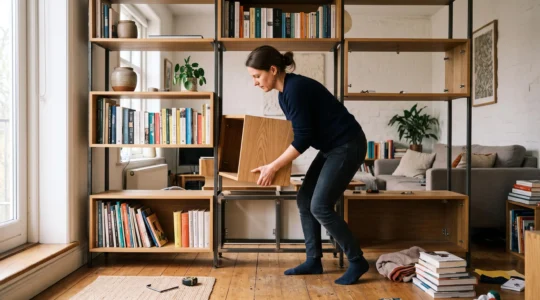
How Can Modular Shelving Adapt as Your Storage Needs Change Over Time?
Modular shelving adapts to changing storage needs by allowing compatible shelves, compartments, cabinets and supporting components to be rearranged or expanded. Instead of replacing an entire bookcase when your possessions…
Lire la suite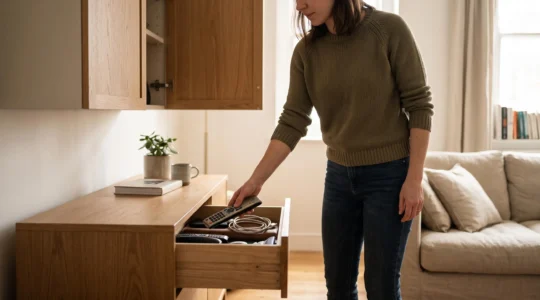
How Can You Make Everyday Storage Easier to Reach Without Creating Visual Clutter?
A home can have plenty of cupboards and shelves yet still feel cluttered. The problem is often not a lack of storage space but the effort required to use it….
Lire la suite