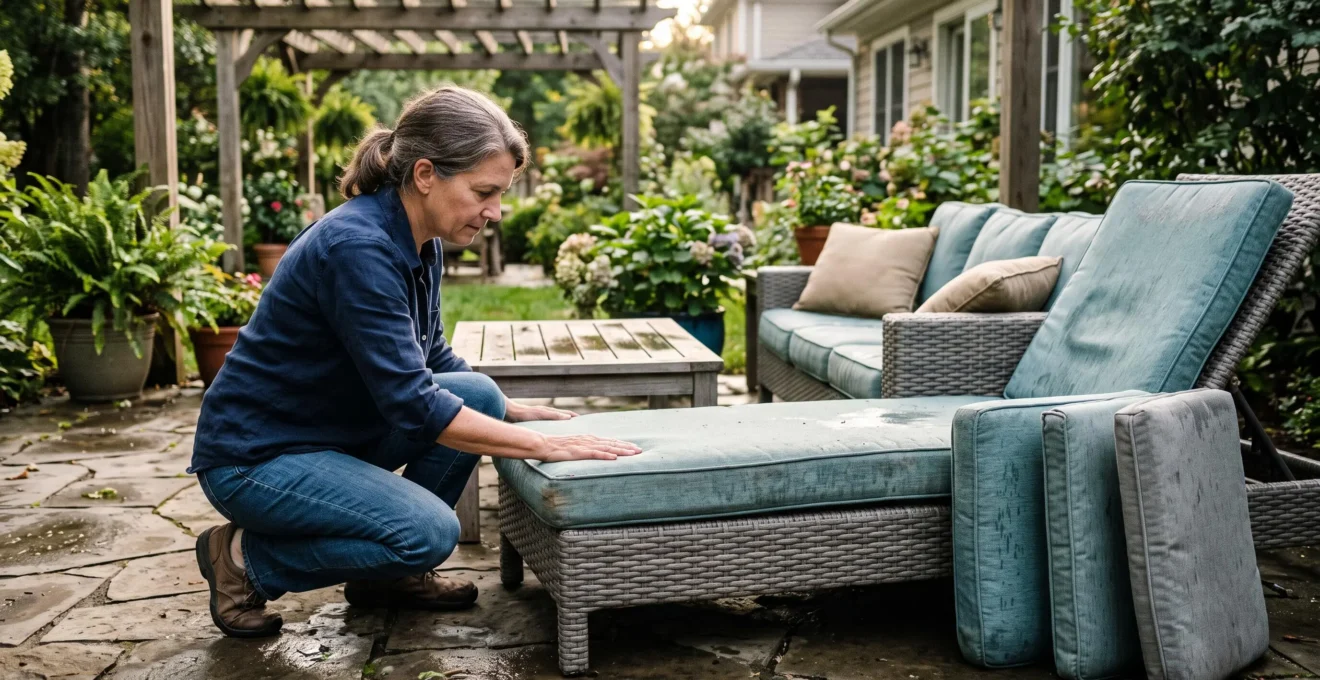
Comfortable outdoor upholstery needs to do more than survive an occasional rain shower. It must tolerate sunlight, moisture and everyday friction without becoming unpleasant to sit on. A cushion that resists fading but retains water inside its filling can be just as disappointing as a beautifully soft fabric that deteriorates after prolonged exposure.
For most homeowners, solution-dyed acrylic or a suitably specified outdoor olefin fabric is a sensible starting point. Both can provide a comfortable woven surface with useful outdoor performance, although individual products differ considerably. Coated textiles may be better for furniture that needs frequent wiping, but their texture and breathability deserve closer inspection.
The most reliable choice depends on the entire cushion: its outer fabric, filling, seams, drainage and cleaning requirements. Local conditions matter equally. A sunny, dry patio creates different demands from a humid garden seating area or an exposed coastal terrace. Choosing the right combination is therefore more effective than buying the material with the most impressive weather-resistant label.
What matters most when choosing outdoor upholstery
- Match the fabric to exposure: prioritize documented lightfastness for intense sunshine, and drying performance for wet or humid locations.
- Evaluate the whole cushion: comfortable fabric cannot compensate for waterlogged foam, weak stitching or unsuitable hardware.
- Plan maintenance before buying: removable covers, accessible storage and good airflow often matter more than an attractive product description.
- Why Do Standard Upholstery Fabrics Fade or Deteriorate Outdoors?
- How Can You Compare Outdoor Upholstery Fabrics for Sun and Rain Exposure?
- Loose Cushions or Fixed Outdoor Upholstery: Which Is Easier to Maintain?
- What Can Damage Weather-Resistant Upholstery Despite Its Outdoor Rating?
- When Should Outdoor Cushions Be Stored Rather Than Left Outside?
- How Can You Arrange Seating and Dining Areas on a Small Patio?
- Which Tactile Materials Are Difficult to Maintain in Busy Homes?
- How Can You Design an Exterior Patio That Feels Like a Real Outdoor Room?
Why Do Standard Upholstery Fabrics Fade or Deteriorate Outdoors?
Standard indoor upholstery deteriorates outdoors because it is not necessarily designed to resist prolonged ultraviolet exposure, repeated moisture or changing weather conditions. Sunlight can fade dyes and damage fibers, while absorbed water can leave padding damp enough to support mold growth. Outdoor-specific fabrics and cushion constructions address these separate risks through color stabilization, moisture management and appropriate materials.
Sunlight primarily challenges color retention and fiber durability. Ultraviolet radiation can alter dye molecules and contribute to the degradation of susceptible textile fibers. However, visible fading and structural weakening are not the same problem. A fabric may lose its original shade while remaining serviceable, or retain an attractive appearance despite wear elsewhere in the cushion.
The coloring process is worth examining. In solution-dyed textiles, pigments are incorporated into the fiber during manufacture rather than applied only after yarn or fabric production. Sunbrella, for example, describes incorporating UV-stabilized pigments into its acrylic fibers in Sunbrella’s explanation of solution-dyed performance fabrics. This is a meaningful construction characteristic, but it does not establish that every solution-dyed product performs identically.
Moisture creates a different failure mechanism. Rainwater or condensation can penetrate seams, openings and permeable fabric, reaching the cushioning underneath. The visible cover may dry before the interior, concealing damp foam or batting. Prolonged moisture can encourage microbial growth and, depending on the filling, contribute to discomfort or deterioration.
The US Environmental Protection Agency emphasizes that moisture may remain hidden in absorbent furnishings and that drying the visible surface is not always sufficient. Its guidance on identifying mold and hidden moisture illustrates why padding deserves particular attention.
24–48 hours
The EPA recommends drying wet materials within this general timeframe to help prevent mold growth. This is moisture-control guidance, not a guarantee that outdoor cushion interiors will remain safe if left damp for that period.
US Environmental Protection Agency, Mold Course Chapter 3.
Repeated wetting and drying also subjects upholstery to changing moisture conditions. Its consequences depend on fiber chemistry, weave, finishes, construction and the conditions involved; not every outdoor textile necessarily loses strength simply because it becomes wet repeatedly.
Before purchasing, inspect the complete product specification. Look for the fiber composition, coloration method, outdoor lightfastness information, filling construction and seam details. Open-cell foam can retain substantial moisture unless specifically engineered for drainage, while closed-cell materials behave differently but may also feel firmer. Foam structure alone is not enough to predict comfort or drying performance.
A weather-resistant cover is therefore only the first layer of protection. Once the different damage mechanisms are understood, fabric comparisons become more meaningful than generic waterproof or all-weather claims.
How Can You Compare Outdoor Upholstery Fabrics for Sun and Rain Exposure?
Compare outdoor upholstery fabrics by examining three characteristics together: resistance to sunlight, behavior when exposed to water, and breathability against the skin. Solution-dyed acrylic and outdoor olefin often suit soft, woven seating; suitable polyester constructions offer other options; and coated textiles can simplify surface cleaning. Actual performance depends on product-specific tests, not fiber names alone.
A fabric that repels droplets is not necessarily waterproof, and a waterproof surface does not guarantee a dry cushion. Water can enter through stitching, joins or damaged areas. More importantly, a strongly coated surface may restrict moisture vapor movement, creating a less comfortable seating experience in hot conditions.
The main fabric families can be compared through their typical construction characteristics rather than an unsupported universal ranking.
| Fabric family | Sun and water considerations | Comfort and maintenance implications |
|---|---|---|
| Solution-dyed acrylic | Designed for improved color retention; water behavior depends on weave and finishes. | Often offers a soft, textile-like surface. Breathable constructions can still allow moisture into the cushion. |
| Outdoor olefin (polypropylene) | Low fiber moisture absorption; lightfastness depends on pigments and product construction. | Can provide comfortable woven textures. Check surface feel, fabric weight and abrasion performance. |
| Outdoor polyester and polyester blends | Performance varies with yarn coloration, UV stabilization and applied finishes. | Offers a broad range of textures and prices. Coatings and finishes can significantly change breathability. |
| Coated outdoor textiles | May provide stronger surface barriers to water, depending on coating type and integrity. | Often easier to wipe clean, but some constructions feel stiffer or warmer against bare skin. |
Technical specifications become useful only when their test conditions are understood. Hydrostatic-head measurements indicate resistance to water pressure under a specified test. Lightfastness results assess color changes under defined exposure conditions, while abrasion tests measure performance under repeated mechanical rubbing.
The Association for Contract Textiles performance guidelines distinguish textile constructions and performance categories, including lightfastness, abrasion, crocking and physical properties. These voluntary guidelines provide a framework for evaluating specifications; they are not a single universal quality ranking.
Compare numbers only when the test methods and intended applications are compatible. A high abrasion result should not compensate for insufficient outdoor lightfastness, while an impressive water-resistance measurement says little about how quickly the entire cushion dries.
For a sunny patio, prioritize verified outdoor lightfastness, comfortable surface temperature and protection from prolonged direct exposure. For a humid garden, focus more strongly on drainage, cushion ventilation and cleaning access. A covered terrace may allow greater freedom to prioritize softness because direct rain exposure is reduced.
Physical samples can reveal comfort differences that specifications cannot. Feel the front and reverse sides for stiffness or a continuous coating. With the supplier’s permission, place a few drops of water on a sample to observe whether they bead, spread or penetrate. This demonstrates surface behavior only; it cannot replace standardized waterproofness testing.
Also examine how the sample feels after sitting in sunlight. Some surfaces become noticeably less pleasant against bare legs when warm. A fabric that looks excellent on a showroom display may be uncomfortable during a hot afternoon.
Five checks to complete before buying outdoor upholstery
- Document your exposure: note whether the furniture receives direct sun, wind-driven rain, overnight dew or reliable overhead cover. Produce a short exposure checklist.
- Request comparable specifications: collect each shortlisted fabric’s fiber composition, coloration method, lightfastness information and applicable test methods. Keep the product specification sheets together.
- Examine fabric samples: feel both sides, inspect any coating and observe a permitted water-drop test. Record a brief comfort and surface-behavior assessment for each sample.
- Verify the complete cushion construction: obtain details of the foam, drainage, seams, zippers and cover removal instructions. Identify any missing product information.
- Confirm upkeep before purchasing: check cleaning compatibility, expected drying arrangements and storage space. Finish with a written choice supported by your actual conditions.
Once the material has been selected, the next decision is how it should be installed. An excellent fabric can still become inconvenient when the upholstery format makes cleaning or drying difficult.
Loose Cushions or Fixed Outdoor Upholstery: Which Is Easier to Maintain?
Loose outdoor cushions are generally more flexible to maintain because they can be moved, inspected, dried and sometimes recovered separately. Fixed upholstery can be easier to wipe down during everyday use, especially in sheltered spaces, but cleaning and drying access may be more restricted. The better choice depends on exposure, cushion construction and available storage.
Loose cushions provide several practical advantages. They can be lifted after rain, stood upright where appropriate and moved into a ventilated storage area. A spill on one seat does not necessarily require handling an entire upholstered furniture unit. Depending on construction, a damaged cover or filling may also be replaceable independently.
However, removable does not automatically mean machine washable. Covers may contain special linings, finishes or construction details that require hand cleaning. Removing them without checking the furniture instructions can also make refitting difficult or damage components.
Fixed upholstery eliminates the need to arrange loose cushions every time the furniture is used. It can be particularly convenient around covered dining benches or regularly occupied outdoor seating. Yet if water reaches an inaccessible junction between upholstery, padding and frame, thorough inspection and drying may become more difficult.
The following comparison addresses the complete maintenance cycle rather than surface cleaning alone.
| Maintenance factor | Loose cushions | Fixed upholstery |
|---|---|---|
| Everyday cleaning | Individual cushions may need moving or removing. | Exposed surfaces can often be wiped in place. |
| Drying after rain | Cushions can usually be repositioned for airflow. | Drying depends on built-in ventilation and accessibility. |
| Inspecting hidden moisture | Undersides and separate cushions are easier to examine. | Some padding and contact areas may be difficult to reach. |
| Replacing worn components | Individual covers or inserts may be replaceable. | Repair options depend on how the upholstery is attached. |
| Storage | Requires accessible space for loose components. | Generally remains with the furniture. |
In humid climates, the ability to inspect and ventilate cushion interiors becomes particularly valuable. But fixed upholstery is not inherently prone to mold: a well-engineered system with suitable drainage and ventilation may perform better than poorly constructed loose cushions left wet.
Household habits should ultimately guide the decision. Homeowners who routinely move cushions indoors may appreciate removable components. Those with sheltered furniture who value immediate usability may prefer fixed upholstery, provided its drying and repair arrangements are clear.
Neither format eliminates maintenance. Once a cleaning routine is established, attention should turn to the stains, chemicals and mechanical stresses that outdoor performance labels do not fully address.
What Can Damage Weather-Resistant Upholstery Despite Its Outdoor Rating?
Weather-resistant upholstery can still be damaged by substances and activities outside the conditions covered by its performance claims. Sunscreen, insect repellent, oils, chlorine, salt deposits, food residues and abrasive contact may affect particular fabrics or finishes. Cushion fillings, seams and hardware can also fail independently, so regular inspection and manufacturer-approved cleaning remain important.
Weather resistance is not universal chemical resistance. A fabric designed to tolerate rain and sunlight has not necessarily been tested against every household product or environmental contaminant.
Sunscreen and insect repellent can leave persistent residues, while cooking oils and skin oils may penetrate textured surfaces. Chlorinated pool water and salt spray deserve attention where upholstery is repeatedly exposed, particularly around metal hardware and components whose corrosion resistance is uncertain.
Bird droppings, tree sap and food spills present another challenge. Some residues adhere strongly to the weave or leave visible staining. Prompt removal using an approved method is preferable to letting contamination accumulate, especially on frequently used seating.
Mechanical wear is equally important. Repeatedly dragging cushions over rough furniture edges can abrade fabric or stitching. Hook-and-loop fasteners may snag nearby textiles. Zippers, ties, seams and connectors can become weak points even when the main fabric retains its appearance.
A useful inspection includes the underside of each cushion, corners under tension, zipper tracks and any areas that remain in contact with damp furniture surfaces. Check whether a cushion has lost support, developed a persistent odor or shows evidence of moisture inside the filling. None of these conditions can be ruled out by a cover’s fade-resistance claims.
Cleaning requires similar care. Harsh treatment can damage some finishes, distort fabric or affect components that tolerate different products from the outer textile. Pressure washing should not be assumed suitable, and bleach compatibility must be checked rather than universally accepted or rejected.
For example, Sunbrella upholstery cleaning instructions distinguish removable from non-removable fabrics, recommend appropriate mild-soap cleaning and air drying in specified circumstances, and allow particular bleach treatments for severe mold or mildew. These instructions are specific to eligible fabrics and must be considered alongside the furniture manufacturer’s directions.
For an unfamiliar product, a conservative approach is to remove loose dirt, use an approved mild cleaning solution, rinse as directed and allow thorough air drying. Never assume that a removable cover, filling or zipper can tolerate machine washing, heated drying or strong chemical treatment.
Even careful cleaning cannot compensate for cushions that stay damp for extended periods. Storage and drying habits are therefore the next major part of long-term upholstery care.
When Should Outdoor Cushions Be Stored Rather Than Left Outside?
Outdoor cushions should be moved into suitable shelter whenever their exposure repeatedly leaves them damp for prolonged periods, when severe weather is expected, or when furniture will remain unused for an extended time. Storage decisions should be based on actual drying conditions rather than season alone. Cushions must be fully dry before being enclosed or packed away.
Rainfall is only one source of moisture. Overnight dew, condensation, wind-driven rain and limited airflow can all affect outdoor textiles. A cushion beneath an overhang may avoid direct rain while still experiencing humid conditions that slow drying.
A practical household rule is to inspect cushions the following day after significant moisture exposure. If they repeatedly remain damp into the next day, improve ventilation, reposition them or arrange covered storage. This is a precautionary decision rule, not a scientifically established moisture threshold.
The filling deserves as much attention as the surface. A cushion can appear dry on top while its underside or interior remains wet. Standing suitable loose cushions on edge can expose more surface area to circulating air, but unusually thick or saturated fillings may need additional drying time or specialist attention.
Short-term protection can involve moving cushions beneath a roof, using a compatible breathable furniture cover or transferring them temporarily to a sheltered, ventilated location. Covers should not be used to seal moisture inside the upholstery.
Off-season storage calls for a more deliberate routine. Remove dirt and residues according to the care instructions, allow the entire cushion assembly to dry and inspect seams and hidden surfaces before packing. Choose a dry storage space with reasonable ventilation, away from leaks or persistently damp walls.
A breathable storage bag may help protect fully dry cushions from dust without sealing in the same amount of humidity as an impermeable enclosure. Airtight plastic containers and non-breathable covers require particular caution: if moisture is already present, sealing the cushions can prolong damp conditions.
The appropriate routine also depends on furniture design. Some quick-draining outdoor cushions are intended to remain in place during ordinary rain, while other products require more active protection. Manufacturer guidance takes precedence over general assumptions about outdoor suitability.
Storage becomes even more practical when considered during patio planning. In a compact outdoor space, furniture position and access can make the difference between an easy routine and cushions that are consistently left exposed.
How Can You Arrange Seating and Dining Areas on a Small Patio?
Arrange small-patio seating and dining areas according to movement, exposure and the activities that happen most often. Place frequently used cushioned seats where shade and airflow are favorable, keep dining spills away from delicate textiles where possible, and preserve clear access for cleaning. The best arrangement reduces upholstery maintenance without sacrificing comfortable circulation.
A small patio concentrates activities into a limited space. Cushions may sit close to dining tables, planted borders, walls and railings. This creates more opportunities for food spills, accumulated debris and restricted airflow around furniture surfaces.
Sun exposure can also vary considerably within the same compact terrace. Furniture beside a wall may receive reflected light and heat, while a seat beneath an overhang may be shielded from direct rainfall. The effect depends on the wall material, orientation and local conditions, so these features should be evaluated in the actual space rather than assumed to be protective.
Position is a maintenance tool. Moving a seat into useful shade can reduce direct solar exposure without changing its fabric. Keeping a small gap behind furniture may help air circulate and allow cushions to be removed or inspected. Avoid pushing upholstered pieces tightly against surfaces that are regularly damp.
Consider a hypothetical compact patio with a dining table and a two-seat outdoor sofa. If the sofa sits beside the main dining route, its seat cushions are more likely to encounter everyday contact and spills. Choosing a washable or easily spot-cleaned performance fabric for those seats may provide more practical value than using the same premium material on every decorative cushion.
In tight spaces, prioritize investment according to use:
- Daily seat cushions: favor suitable abrasion resistance, consistent support, comfortable fabric texture and accessible cleaning.
- Back cushions: consider lighter or softer compatible textiles when their exposure and handling requirements permit.
- Decorative accessories: choose removable items that can be protected easily, rather than relying on their appearance to imply outdoor durability.
The distinction is not absolute. A back cushion left in heavy rain needs appropriate weather resistance regardless of how often someone leans against it. Budgeting by usage must therefore remain consistent with actual exposure.
Plan a convenient route to a storage bench, sheltered corner or indoor cupboard. If cushions must be carried awkwardly through a crowded layout, routine storage becomes less likely to happen.
Once the arrangement is functional, the final comfort question concerns texture. Materials that look inviting can behave very differently after repeated contact, spills and cleaning.
Which Tactile Materials Are Difficult to Maintain in Busy Homes?
Plush velvet, chenille, deep-pile textiles and heavily textured or loosely woven fabrics can be harder to maintain in busy homes because their surfaces may hold debris, display marks or snag during frequent use. Their suitability depends on the specific construction and cleaning requirements. For heavily used outdoor furniture, smoother performance weaves often simplify upkeep without necessarily sacrificing softness.
Touch is an important part of upholstery comfort. A fabric may feel exceptionally pleasant in a showroom because of its raised pile, soft yarns or pronounced woven texture. Those same features can create practical challenges in a home where people eat, move cushions frequently or share furniture with pets.
Velvet and other pile fabrics can display directional shading and pressure marks. Chenille may have a particularly soft, textured hand, yet some constructions are susceptible to snagging or surface wear. Pronounced loops and nubby weaves can catch on claws, jewelry or rough clothing, depending on their construction.
Texture alone does not determine durability. A tightly engineered performance textile with a substantial tactile surface may outperform a smooth but poorly specified alternative. Test results, yarn structure and intended application matter more than whether the material appears luxurious or utilitarian.
The indoor-outdoor distinction is particularly important. A beautiful indoor chenille is not automatically suitable for an exposed patio, even if its texture resembles an outdoor performance fabric. Conversely, outdoor materials do not all have to feel coarse or synthetic. Many woven constructions are designed to provide a softer, more familiar furniture-like feel.
For households with children or pets, examine samples through practical handling:
- Rub the sample lightly against itself and inspect for visible surface changes; this is an informal screening check, not a standardized pilling test.
- Press the textile surface with your palm and observe how the pile or texture recovers.
- Check whether loops or raised yarns catch easily during ordinary handling.
- Review permitted water-based cleaning methods and restrictions on rubbing, soaking or heat.
A useful decorating compromise is to reserve delicate tactile materials for reliably protected indoor locations and choose suitable outdoor-rated versions for exterior seating. Within an outdoor room, softer removable accent cushions can add comfort if they are stored appropriately and their care requirements are realistic.
Texture should ultimately serve the room’s purpose. The same principle applies to an entire patio: visual warmth works best when durability, storage and daily use are considered together.
Key takeaways for a comfortable outdoor room
- Choose upholstery performance according to actual weather exposure and the cushion’s ability to dry, not simply the appearance of the fabric.
- Design seating placement and storage access together so comfort does not depend on difficult daily maintenance.
- Invest first in the upholstered pieces that define the room and receive the most use, then coordinate less demanding accessories around them.
How Can You Design an Exterior Patio That Feels Like a Real Outdoor Room?
Design an exterior patio as an outdoor room by combining defined flooring, purposeful furniture placement, layered lighting and comfortable textiles suited to the climate. Upholstery creates much of the indoor-like feeling, but it also receives significant weather exposure. Start with practical protection and maintenance requirements, then select a coordinated mix of durable and tactile materials.
A convincing outdoor room does not require an elaborate furniture collection. It needs a recognizable seating area, comfortable proportions and enough visual continuity to feel intentional. An outdoor rug or defined floor surface can establish the zone, while seating orientation creates a place for conversation, dining or quiet relaxation.
Upholstery carries much of the comfort because it changes how furniture feels against the body. Seat depth, cushioning support, backrest angle and surface texture all influence whether an outdoor sofa genuinely feels inviting. Decorative color alone cannot compensate for a seat that stays wet, loses shape or becomes uncomfortable in direct sunlight.
Make fabric selection part of the design sequence. First establish the exposure conditions and whether dry storage is available. Next choose the furniture layout and determine which upholstery pieces are fixed or removable. Only then finalize textures, patterns and colors within the suitable performance range.
This sequence prevents a common design mismatch: buying attractive cushions for a photograph-inspired patio without having a practical way to clean, dry or protect them.
Consider an explicitly hypothetical patio with a partially covered seating corner and an exposed dining area. The covered sofa could use a soft, suitably specified woven outdoor fabric, supported by a convenient cleaning routine. The more exposed dining seats might benefit from quick-drying construction and surfaces that tolerate frequent spot cleaning. Both areas can share a coordinated color palette without requiring identical upholstery.
For a cost-conscious design, anchor the room around one or two high-visibility upholstered pieces. A comfortable sofa and a pair of well-cushioned chairs may contribute more to the room’s appeal than numerous decorative items that require constant protection.
Keep the remaining layers simple. Choose lighting appropriate for outdoor installation, leave space for movement, and use accessories that can be removed or maintained without difficulty. If the patio is exposed, incorporate shade and a suitable cushion-storage location into the layout rather than treating them as later additions.
Long-term appearance depends on more than initial color coordination. Cushion shape, clean surfaces, functioning seams and the absence of persistent moisture all contribute to a room that remains pleasant to use. A slightly simpler patio with accessible, well-maintained furniture can be more successful than a more elaborate scheme whose upholstery is difficult to protect.
To make the next purchase decision, identify the two seats used most frequently, request their fabric and cushion specifications, and test the available samples in conditions resembling the actual patio. A comfortable outdoor room begins with upholstery that fits both the environment and the household’s willingness to maintain it.
Is water-repellent outdoor fabric the same as waterproof upholstery?
No. Water-repellent fabric is designed to resist or shed water at its surface under certain conditions, while waterproof performance concerns resistance to water penetration under specified conditions. Even a highly water-resistant cover does not guarantee that the entire cushion is waterproof, because seams, openings and filling construction also matter.
Can outdoor cushions develop mold if their covers are mold-resistant?
Yes. Mold-resistant fabric does not make the entire cushion immune to mold. Dirt, organic residues and moisture can remain on or within cushion components, particularly absorbent padding. Inspect the interior and underside when possible, and dry damp materials thoroughly rather than judging their condition by the exposed cover alone.
Does solution-dyed fabric eliminate the need for shade?
No. Solution dyeing can improve color retention when combined with appropriate pigments and fabric construction, but it does not guarantee permanent color or protect every part of a cushion against prolonged sunlight. Shade also improves seating comfort by reducing direct solar exposure and can help protect other furniture components.
Are quick-dry outdoor cushions always more comfortable?
Not necessarily. Quick-dry construction primarily addresses moisture handling. Sitting comfort also depends on foam characteristics, cushion thickness, support, surface texture and furniture design. A useful comparison combines an actual sitting test with verified information about how the cushion drains and dries.
Can different outdoor upholstery fabrics be mixed on the same patio?
Yes. Different seating zones can use different textile constructions when their weather exposure and maintenance needs vary. For example, a sheltered sofa may prioritize a soft woven surface, while frequently cleaned dining seats may require a different finish. Coordinated colors and proportions can maintain a consistent appearance without forcing every piece to use the same material.