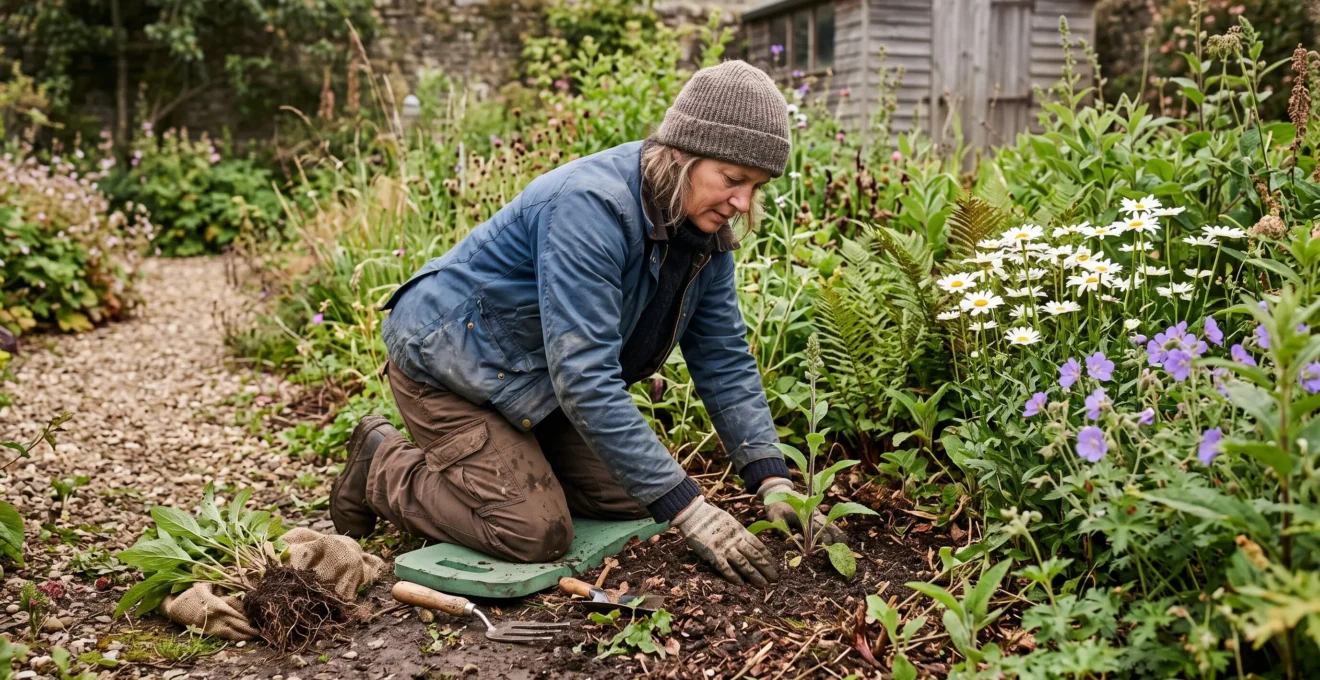
A garden becomes more resilient when its planting works with local growing conditions rather than depending on constant watering, feeding and intervention. British native plants can help achieve this balance, particularly when their natural habitats resemble the soil, light and moisture conditions of the garden where they are planted.
Native species also introduce a distinctive sense of place. Flowering perennials, woodland plants, shrubs and climbers can create informal layers that change through the seasons while providing food and habitat for local wildlife. The result need not resemble an unmanaged meadow. Carefully arranged native planting can look intentional, attractive and appropriate beside a traditional house, contemporary extension or paved patio.
However, native status alone does not guarantee success. A woodland flower may struggle in an exposed sunny border, while a plant adapted to dry chalky ground may fail in waterlogged clay. The most effective approach combines ecological awareness with practical garden design: understand the site, choose compatible species, establish them carefully and retain existing plants that already perform valuable functions.
Native planting: the essentials
- Match habitat before origin: Choose species suited to the garden’s sunlight, soil, drainage and exposure rather than assuming every British native will thrive everywhere.
- Build resilience gradually: Allow for establishment watering and early care, then favour dense, well-matched planting that can become less demanding over time.
- Combine ecology with design: Use native plants as a strong foundation while retaining useful existing plants and incorporating suitable, non-invasive alternatives where appropriate.
- Why Can Native Plants Be Easier to Maintain in British Gardens?
- How Can You Choose Native Plants for Sun, Shade and Different Soil Conditions?
- Native or Non-Native Plants: Which Better Suits a Mixed Garden?
- Why Can a Native Plant Still Fail in the Wrong Part of a Garden?
- When Should You Replace Existing Plants With Native Alternatives?
- Hard Edges or Planted Borders: Which Makes a Patio Feel More Inviting?
- What Should You Add First When Turning a Bare Patio Into an Outdoor Living Area?
- How Can You Design an Exterior Patio That Feels Like a Real Outdoor Room?
Why Can Native Plants Be Easier to Maintain in British Gardens?
Native plants can be easier to maintain because their natural growing requirements often align with British seasonal conditions. When placed in suitable soil and exposure, established species may need less supplementary watering, feeding or protection than plants struggling outside their preferred habitat. However, native does not automatically mean maintenance-free, and appropriate establishment care remains essential.
Britain’s seasonal pattern includes cool winters, periods of persistent rainfall and occasional summer drought. Species naturally occurring in comparable habitats have adaptations that help them cope with those conditions. For example, woodland perennials are adapted to seasonal shade and competition from surrounding vegetation, while plants associated with open grassland often tolerate relatively exposed conditions.
Such adaptations matter because gardening becomes more labour-intensive when plants require conditions the site cannot naturally provide. A moisture-loving species in dry soil may demand repeated irrigation; a plant intolerant of winter wet may require drainage improvements or protection. Choosing plants already suited to the location reduces these mismatches.
There is an important distinction between being native and locally adapted. A non-native species originating from a climate and habitat comparable to a British garden may perform exceptionally well. Conversely, a British native from a wet woodland habitat may struggle on an exposed, freely draining slope.
Below ground, established roots can help hold soil together, maintain channels through which water moves and contribute organic material as roots grow and die. Root depth and structure depend on the individual species and soil conditions, however; not all native plants develop deeper roots than comparable non-natives.
Above ground, native planting can strengthen local food webs. The RHS Plants for Bugs research programme found that predominantly British native planting was particularly beneficial for invertebrates living on foliage and stems. Dense vegetation also supported more invertebrates, irrespective of plant origin.
Four years
The duration of the RHS Plants for Bugs research programme. Researchers collected nearly 23,000 plant-dwelling invertebrate specimens while investigating how planting origin and vegetation density affected these organisms. The findings concern sampled invertebrates, not proven reductions in watering or pest-control work.
Newly planted borders still require attention. During the first growing season, roots must establish contact with the surrounding soil, and dry periods may require thorough watering. Some plants continue to need additional care into their second season, especially in exposed or drought-prone locations.
Over time, suitable plant combinations can form a stable, relatively low-input border. Seasonal cutting back, selective thinning and occasional replacement may remain necessary, but these tasks are generally more predictable than repeatedly rescuing poorly matched plants.
That advantage becomes much more reliable when plant selection begins with an accurate assessment of the conditions in which each species will grow.
How Can You Choose Native Plants for Sun, Shade and Different Soil Conditions?
Choose native plants by assessing sunlight, soil texture, drainage, pH and exposure before selecting species. Record where the garden receives direct sun, where moisture collects and where shade persists. Then match each plant’s natural habitat and growing requirements to those observations. The right plant in the right place is more valuable than a long list of native species.
Begin by observing sunlight during the morning, around midday and in the afternoon. Repeat observations across seasons where possible, because deciduous trees, changing sun angles and nearby buildings can dramatically alter exposure.
Next, examine the soil. A handful of moist soil can reveal whether it feels gritty, crumbly or sticky. Watch how quickly water disappears after rainfall, and use a suitable soil-testing kit when pH is uncertain. A single garden may contain compacted clay, improved borders and dry pockets beneath mature trees.
The following examples illustrate how different British native species can fit contrasting conditions. These are starting points for selection, not guarantees: individual plants may have narrower requirements than a broad habitat category suggests.
| Garden conditions | Potential native plants | What to check |
|---|---|---|
| Sunny, open, reasonably well-drained border | Oxeye daisy, meadow cranesbill, wild marjoram | Available moisture, soil fertility and eventual spread |
| Dry shade beneath established trees | Male fern, wood anemone once established | Root competition, humus levels and spring moisture |
| Partly shaded, reasonably moist soil | Foxglove, red campion, selected native ferns | Drainage, summer moisture and the plants’ life cycles |
| Heavy clay that remains moist | Meadowsweet, purple loosestrife where moisture is reliable | Whether the soil stays damp or becomes dry and cracked in summer |
| Free-draining, alkaline or chalky soil | Wild thyme, field scabious, bird’s-foot trefoil | Sunlight, fertility and competition from vigorous neighbours |
The distinction between heavy clay and consistently wet soil is especially important. Clay can retain moisture in winter yet become extremely dry in summer. Likewise, dry shade beneath a mature tree is not equivalent to a naturally moist woodland floor.
Read nursery descriptions for preferred aspect, moisture, soil type, mature height, spread and maintenance. The RHS advice on planning a garden border emphasises these site conditions, along with the influence of local microclimates and surrounding structures.
Where conditions are uncertain, start with a small pilot border rather than redesigning the entire garden. Testing several carefully chosen species provides practical evidence of how the site behaves through changing weather.
Five steps to build a native planting shortlist
- Map sunlight: Observe the proposed border at different times and produce a simple sketch identifying sunny, partly shaded and deeply shaded areas.
- Examine soil: Check texture, drainage and pH, then record the findings in a short site-condition sheet.
- Identify habitat matches: Select five potential native species and create a shortlist showing each plant’s preferred light, moisture and soil conditions.
- Check mature growth: Compare eventual height, spread and seasonal appearance, then produce a planting sketch with realistic spacing.
- Test before expanding: Plant a small trial area, record establishment watering and seasonal performance, and use the resulting observations to guide the next planting phase.
Once those conditions are understood, the next decision is not simply which native species to buy, but how they should fit alongside non-native plants already contributing to the garden.
Native or Non-Native Plants: Which Better Suits a Mixed Garden?
A mixed garden often benefits from both British native plants and carefully selected non-native species. Native plants can provide a strong ecological foundation, while suitable non-natives may extend flowering periods, offer structural interest or tolerate particular garden conditions. The most useful decision considers ecological function, local suitability and invasive potential, rather than treating plant origin as the only measure of value.
For wildlife, native plants can be especially important where insects depend on particular host species for feeding or development. This relationship extends beyond nectar: foliage, stems, seeds and plant structure can all contribute to the ecological value of a border.
Research also shows why excluding every non-native species is unnecessarily restrictive. The RHS Plants for Bugs programme found that northern-hemisphere non-native planting supported substantial populations of plant-dwelling invertebrates, although British native planting performed better overall in the relevant comparisons.
For flower-visiting insects, the picture is more flexible. The RHS advice on native and non-native plants for pollinators supports mixing plants from different geographical origins, particularly where this increases the availability of flowers across the growing season.
This distinction matters when choosing plants promoted as wildlife-friendly. A non-native flowering perennial may provide accessible nectar or pollen for adult insects without serving as an appropriate host plant for their larvae. Conversely, a British native species may support insects through its foliage even when its flowers are relatively inconspicuous.
Double-flowered ornamental varieties deserve additional scrutiny. In some, extra petals restrict access to reproductive structures or reduce accessible pollen and nectar. The effect varies between cultivars, so visible flower structure and observed insect visits are more informative than broad assumptions.
Before adding a non-native species, compare its practical characteristics with those of a native alternative.
| Selection criterion | British native option | Non-native option |
|---|---|---|
| Wildlife relationships | May support locally associated feeding insects and other organisms | May provide nectar, pollen or shelter, but host relationships vary |
| Seasonal display | Can establish a locally characteristic flowering and foliage sequence | Can complement native species during gaps in flowering |
| Growing conditions | Must match the species’ particular natural habitat | Must match the garden’s climate, soil and exposure |
| Spread and management | Check vigour and suitability for the available space | Check invasive status, self-seeding and potential escape into the wider landscape |
| Design contribution | Provides naturalistic texture and potentially valuable habitat structure | Can add contrasting foliage, form or seasonal interest |
Invasive risk requires particular attention. A non-native plant that behaves well in a contained border is different from one capable of spreading into surrounding habitats. Some invasive alien plants are subject to legal restrictions, while many ordinary non-native ornamentals are not.
For England and Wales, Defra guidance on invasive non-native plant rules in England and Wales explains restrictions affecting listed species, including rules on planting and intentionally causing their spread. Scotland and Northern Ireland have separate regulatory arrangements that should be checked where relevant.
There is no universal percentage of native species that guarantees a wildlife-friendly garden. A better principle is to maintain substantial, diverse native planting, avoid unnecessary ecological risks and use non-native plants where they offer a clear benefit.
Even within a predominantly native border, however, individual species can fail if the conditions in their particular planting positions do not match their requirements.
Why Can a Native Plant Still Fail in the Wrong Part of a Garden?
A native plant can fail because being native to Britain does not mean it is adapted to every British garden or even every position within one garden. Differences in moisture, light, soil chemistry, shelter and root competition can make neighbouring planting areas behave very differently. Microclimate and habitat suitability remain essential, regardless of a plant’s geographical origin.
Consider wood anemone, a British native associated with woodland conditions. In a suitable shaded position with seasonal moisture and a woodland-like soil environment, it can establish attractive spring ground cover. In a hot, exposed border beside a south-facing wall, it may struggle because the conditions differ sharply from its preferred habitat.
A similar mismatch occurs when a plant associated with free-draining chalk grassland is placed in compacted, poorly drained clay. The species may be native to the surrounding region yet unable to tolerate the conditions around its roots.
Several garden features create small but important environmental differences:
- Rain shadows: Walls, roof overhangs and fences may shelter soil from rainfall, creating unexpectedly dry planting positions.
- Frost pockets: Cold air can accumulate in lower areas, exposing plants to more severe local freezing conditions.
- Dry shade: Large trees can intercept rainfall while their roots compete strongly for available moisture.
- Reflected heat: Paving and walls can intensify summer warmth and increase moisture loss near borders.
- Compacted ground: Frequently walked areas may drain and support root growth differently from nearby cultivated beds.
These variations explain why the same species may flourish on one side of a garden and deteriorate only a few metres away.
When a plant deteriorates, identify the likely source of stress before replacing it. Yellowing foliage and decaying crowns during wet periods may indicate poor drainage, although pests, disease or nutrient problems can produce overlapping symptoms. Persistent wilting, dry soil and scorched foliage during hot weather suggest moisture stress, but damaged roots can produce similar signs.
Also check planting depth. A crown buried too deeply may be vulnerable to decay, while exposed roots can dry out. Planting at an unsuitable time or failing to water thoroughly during establishment can cause problems even when the eventual growing position is appropriate.
Nursery origin can influence early performance as well. Plants of the same species may come from different seed provenances or have experienced different growing environments. Container-grown stock, for example, may require a period of adjustment after moving into garden soil. These differences do not prove that one supplier’s plants are inherently superior, but they are reasons to assess plant quality and establishment needs carefully.
Where possible, correct the environmental mismatch rather than repeatedly replacing damaged specimens. Improve drainage where suitable, reduce competition, adjust watering or relocate a plant to conditions closer to its natural habitat.
That distinction is equally useful when deciding whether existing garden plants should be removed or retained during an ecological redesign.
When Should You Replace Existing Plants With Native Alternatives?
Replace existing plants with native alternatives when they repeatedly fail, demand disproportionate maintenance, present invasive risks or contribute little to the garden’s intended purpose. Healthy, established non-native plants do not automatically need removing. Gradual replacement usually preserves more garden structure and allows new native planting to establish without creating extensive bare areas.
Start by reviewing what is already growing successfully. A mature ornamental cherry may provide shade, seasonal flowers, visual character and habitat structure. A healthy established hedge may shelter birds and protect a seating area from wind. Removing such features solely because they are not native can sacrifice practical and ecological benefits that will take years to replace.
Conversely, a thirsty ornamental shrub that continually struggles in summer, a short-lived plant occupying a valuable structural position or a species requiring repeated pest-control measures may be a sensible replacement candidate.
Use the following decision framework before lifting established planting:
| Existing plant situation | Suggested approach | Reason |
|---|---|---|
| Healthy, mature tree or established hedge | Retain unless there is a separate compelling reason for removal | Preserves shade, structure and existing habitat value |
| Plant repeatedly suffering from unsuitable soil or exposure | Consider replacement with a better-matched species | Reduces recurring maintenance and failure |
| Ordinary non-native plant providing useful seasonal flowers | Assess its role before deciding | May still support pollinators or extend flowering |
| Heavily double-flowered cultivar with little observed insect use | Consider a wildlife-supporting alternative when replacement is appropriate | Some cultivars offer limited accessible floral resources |
| Legally regulated or demonstrably invasive species | Seek species-specific management guidance | Removal, handling and disposal may need particular precautions |
For most gardens, the least disruptive approach is to replace one area at a time. Begin with the most demanding or least appreciated plant, decide what role its replacement must fulfil, and select a suitable native species.
A large evergreen shrub should not automatically be exchanged for a low-growing wildflower. The resulting gap could remove privacy, winter structure and shelter. Instead, consider a native shrub or a layered combination that fulfils a comparable design function.
Prepare the ground before replanting. Assess soil compaction and drainage, remove persistent weeds and address obvious site problems without automatically enriching soils that naturally suit low-fertility species. Planting choices should follow the soil conditions being created or retained.
Timing also matters. Spring and autumn can offer favourable establishment conditions for many garden plants, although exact timing depends on species, planting stock, soil conditions and weather. Avoid leaving large areas of exposed soil unattended through winter; appropriate mulch or temporary ground cover can help protect the surface while planting becomes established.
Sentimental plants deserve particular consideration. A mature tree planted by a family member or a long-standing hedge can remain a meaningful garden feature while nearby beds are gradually enriched with native perennials, shrubs and climbers.
Once the garden’s main planting structure is working well, the same principles can soften the hard boundaries around patios and other outdoor living spaces.
Hard Edges or Planted Borders: Which Makes a Patio Feel More Inviting?
Planted borders generally make a patio feel softer and more connected to the garden, while hard edges provide definition, durability and clear routes for movement. The most inviting design often combines both: retain firm surfaces for furniture and circulation, then introduce carefully positioned planting to add texture, wildlife activity and seasonal interest without obstructing the space.
A patio surrounded entirely by paving, walls and sharply defined edging can feel orderly and contemporary. However, extensive hard surfaces may also make a small garden appear visually severe, particularly when neighbouring fences or walls dominate the view.
Planting introduces contrasts that hard materials cannot provide alone. Leaves move in the breeze, flowers shift through the seasons and different plant heights break up rigid horizontal and vertical lines. Fragrant plants can introduce another sensory dimension, provided their scents and positioning suit the intended seating area.
Native plants can make this transition particularly effective. Meadow cranesbill and oxeye daisy can contribute informal summer flowers in suitable sunny positions, while native ferns create softer foliage texture where shade and moisture conditions allow. Honeysuckle may climb a suitable support to connect a patio boundary with taller planting.
Flowering plants may also attract bees, butterflies and other insects, making wildlife part of the experience of sitting outdoors. This benefit depends on the species selected, the surrounding habitat and the availability of flowers rather than native status alone.
A useful design approach is to keep the working parts of the patio clear and soften its perimeter. Retain sufficiently stable surfaces beneath tables and chairs, preserve direct routes between doors and seating areas, and position layered planting in corners or along boundaries.
Taller shrubs and climbing plants can frame a view rather than block it. Lower flowering perennials along the paving edge can ease the transition into a wider garden without taking away useful floor space.
There is a maintenance compromise. Borders require establishment watering, weed control and occasional seasonal management. Plants may spread into circulation areas and need selective trimming, while fallen leaves and flowers can require clearing from paving.
Species choice and spacing determine whether these tasks remain manageable. A small selection of compatible, naturally well-proportioned plants is often easier to maintain than an overcrowded border filled with vigorous species.
Achieving that balance is easier when decisions about planting and privacy are made before furniture and decorative accessories begin competing for space.
What Should You Add First When Turning a Bare Patio Into an Outdoor Living Area?
Start by assessing the patio’s orientation, dimensions, drainage and fixed features, then plan privacy, shade and circulation before buying furniture. These constraints determine where people can sit comfortably and where planting can thrive. Establishing the spatial framework first prevents a common problem: a furnished patio with too little room left for plants or comfortable movement.
Look at how the patio connects with the house. Identify doors, steps, regularly used paths and the areas receiving morning or afternoon sunshine. Check where rainwater collects and where walls, fences or neighbouring buildings create shelter or shade.
Next, decide what the patio needs to do. A dining area requires enough space for the table, chairs and movement around them. A quiet reading corner may need privacy, comfortable seating and protection from strong afternoon sun. These uses should determine the layout before decorative choices are made.
Planting can establish a sense of enclosure. A trellis with a suitable climber, a layered border or carefully positioned shrubs can define the edges of the space without creating another solid wall. Where the available ground is limited, containers may provide a more flexible alternative.
Choose plants according to the conditions around the patio. Sunny containers may suit certain compact native grassland species when drainage and watering can be managed. Shadier, more sheltered positions may suit appropriate woodland plants or ferns, although dry shade near walls requires particular care.
Container planting deserves realistic expectations. Because roots have limited access to surrounding soil, even drought-tolerant species may need frequent monitoring and watering during hot weather. Native status does not remove this requirement.
Rather than buying a complete furniture set immediately, mark out the proposed layout using temporary objects or simple measurements. Test whether chairs can be moved, doors opened and paths used comfortably. Allow for the mature spread of any border plants, rather than designing exclusively around their size at purchase.
Planting and furnishing can then develop together. Position containers temporarily, observe sunlight while using the space and adjust the arrangement before committing to larger permanent installations.
Furnishings can be refined later, but structural problems are more difficult to correct. Poor drainage, inadequate circulation and oversized furniture can undermine the benefits of an otherwise attractive planting scheme.
Once those foundations are established, the patio can be developed as a complete outdoor room, with planting helping to define its walls, atmosphere and relationship to the house.
Key takeaways before designing the complete space
- Establish a clear purpose for each part of the patio, then preserve enough space for circulation and furniture before adding planting.
- Use plant height, evergreen structure and suitable climbers to shape enclosure without sacrificing light or important views.
- Connect patio materials and planting choices to the wider garden so the finished space feels integrated rather than isolated.
How Can You Design an Exterior Patio That Feels Like a Real Outdoor Room?
Design a patio as an outdoor room by giving it recognisable boundaries, a practical floor layout and some form of overhead or vertical structure. Planting can act as living walls, paving can distinguish different activities and a pergola or tree canopy can create enclosure. Native plants add seasonal character and wildlife interest while connecting the space to its surroundings.
Begin with the same spatial logic used indoors. A room feels coherent because its different surfaces and functions relate to one another. Outdoors, that structure can be achieved without enclosing the area completely.
The patio floor might combine stable paving for dining with a smaller gravel section for informal seating. Raised beds, planted borders or restrained changes in surface material can define those zones without physical partitions.
Living walls can be formed from shrubs, hedges and climbing plants supported on appropriate structures. Native honeysuckle, for example, can contribute seasonal flowers on a suitable trellis, while carefully selected native evergreen shrubs can provide a more permanent green framework. Exact choices should reflect the space available, mature size and local conditions.
Overhead structure changes how the area feels. A pergola can define the seating zone and support compatible climbers, while an established tree canopy may create dappled shade. Both require appropriate positioning, structural consideration and ongoing maintenance.
Even small patios benefit from simple zoning. A compact dining table near the house and a quieter seat facing the garden can feel like distinct destinations when differentiated by planting height, outlook or surface texture. The aim is not to divide every square metre but to make each activity comfortable.
Year-round visual interest comes from combining lasting structure with seasonal change. Evergreen planting can help maintain enclosure through winter, while native perennials provide changing foliage, flowers and seedheads. Avoid assuming every native species offers winter screening: many herbaceous plants die back or become dormant.
Wildlife-friendly planting can bring activity closer to seating. Flowering borders may attract bees, butterflies and hoverflies, while shrubs can offer places for birds to perch or shelter. Place vigorous or prickly plants away from narrow walkways, and avoid blocking access points with mature growth.
The relationship with the house is the final organising element. Doors and existing paths should lead naturally towards the main seating area. Keeping important sightlines open helps the patio feel like an extension of the living space, rather than a detached patch of paving.
Planting can soften the point where built surfaces meet the wider garden. A border that overlaps the visual edge of paving, or a climber linking a wall to surrounding foliage, can make the transition feel gradual while preserving functional boundaries.
Resilience should inform these design decisions from the start. Favour plants suited to the site’s natural conditions, allow realistic growing space, preserve existing beneficial vegetation and keep maintenance access straightforward.
A successful outdoor room does not require every feature to be installed immediately. Establish the framework first, observe how the space behaves in different seasons and develop the planting as the garden matures.
Start with a sketch of the patio and its adjoining borders, identify one planting area that could work better, and select a few appropriate native species to establish there. This manageable first change can improve the space without requiring an immediate full garden redesign.
Do native plants need watering after planting?
Yes. Newly planted native species generally need watering while their roots establish, particularly during dry weather. Watering needs depend on plant size, soil type, season and rainfall. Established plants suited to their position may subsequently need less supplementary irrigation, but native status alone does not guarantee drought tolerance.
Can native plants make a small garden look untidy?
Native planting can look informal without appearing neglected. Repeated plant groups, clearly defined paths, restrained species selection and occasional seasonal cutting back create visual order. Combining flowering perennials with shrubs or evergreen structure can give a small garden a natural appearance while preserving a deliberate overall design.
Are British wildflowers suitable for planting in containers?
Some British wildflowers can grow successfully in containers, provided the species suits the available root space, drainage and sunlight. Container soil may dry out quickly, so watering and occasional maintenance remain important. Choose compact plants and avoid assuming that species thriving in open ground will behave identically in pots.
Should fallen leaves and dead stems always be removed from native borders?
No. Where suitable, some fallen leaves and standing stems can provide shelter and habitat for invertebrates. However, leaves may need clearing from slippery paths, drainage outlets or areas where they could smother sensitive plants. Selective management can balance wildlife benefits with safety, plant health and the garden’s appearance.
Is it better to buy locally sourced native plants?
Locally sourced plants may be worth considering, particularly for habitat-focused schemes where provenance is important. However, suitable growing conditions, plant health and responsible nursery practices remain essential. Ask suppliers about the origin and propagation of their stock, and avoid collecting wild plants without the necessary permissions.